








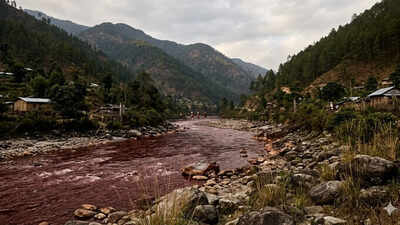
For a long stretch of the year, the Lohit River moves through Arunachal Pradesh with the same pale grey-blue appearance associated with Himalayan rivers carrying glacial water downstream. During heavier monsoon periods, though, sections of the river can take on a darker reddish tone, particularly where sediment flow intensifies along the valley edges. Over time, that unusual colouring helped shape one of the river’s better-known nicknames, the “River of Blood”.The phrase sounds dramatic when separated from its landscape, yet the explanation behind it is tied partly to geology and partly to local mythology. The Lohit, one of the major tributaries of the Brahmaputra, descends through the Mishmi Hills before entering the Assam plains. Its surroundings are steep, rain-heavy, and geologically active, conditions that constantly loosen soil, minerals, and rock fragments into the river channel.
Why is the Lohit River called the river of the blood
In parts of the eastern Himalayan belt, the river cuts through iron-rich terrain and heavily weathered red soils. Sediment carried during seasonal flooding can temporarily alter the appearance of the water, especially after rainfall and landslides upstream.The Lohit Basin Report published by India’s Ministry of Environment and Forests describes the basin as part of a fragile mountainous region shaped by active erosion, steep gradients and high sediment movement. The report also notes the prevalence of red and lateritic soil formations across sections of the catchment area, conditions often associated with iron-bearing minerals washing into river systems. The colour itself is not unique to the Lohit. Rivers in several tropical and Himalayan regions occasionally appear reddish or brown-red after sediment disturbance, particularly where iron oxides are present in exposed soil layers. A study published in ScienceDirect, titled “Geology and tectonic history of the Lohit Valley, Eastern Arunachal Pradesh, India”, while examining arsenic mobilisation in groundwater systems across South and Southeast Asia, discussed how iron compounds within sediments can strongly influence water chemistry and visible colouration under certain environmental conditions. Although the paper was not focused specifically on the Lohit River, its findings help explain why iron-rich sediment transport can alter the appearance of rivers moving through erosion-prone terrain.
The religious story linked to the Lohit River and Parashuram Kund
Local stories surrounding the river stretch much further back than modern geological surveys. In Hindu mythology, the Lohit is linked with the legend of Parashurama, who is believed to have washed away the sin of killing his mother after acting on his father’s command. According to the ScienceDirect study, the river turned red with blood before eventually clearing again.That association became closely tied to Parashuram Kund, a pilgrimage site located near the Lohit River in Arunachal Pradesh. Every year during Makar Sankranti, thousands of pilgrims travel to the area for ritual bathing ceremonies.The river’s name itself is also connected with colour. “Lohit” is derived from Sanskrit terminology associated with redness. In older literary references, the word has been used in relation to copper, red earth and blood-like colouring.
Why the Lohit River can appear darker after heavy rainfall
The Lohit basin sits within one of the most tectonically active regions in India. Heavy rainfall, frequent slope erosion and shifting river channels constantly reshape the landscape around it. During monsoon months, suspended sediment levels rise sharply, making the river appear denser and darker than it does in winter. As per the official Lohit basin report, it notes that landslides and rapid runoff remain common across the region because of the combination of steep terrain and fragile rock structures. Rivers flowing through these environments often carry enormous sediment loads downstream into the Brahmaputra system. That changing appearance is part of why descriptions of the Lohit differ so widely depending on season, location and weather conditions. In some stretches, it appears pale and fast-moving. Elsewhere, after heavy rain, the water can briefly resemble diluted rust.
How the Lohit River became one of India’s most unusual rivers
The “River of Blood” title survives largely because both explanations, the physical and the mythological, overlap so easily. Iron-rich sediments offer one explanation for the reddish water occasionally seen in the river, while local religious tradition gives the colour a symbolic meaning that has endured for generations. Neither interpretation fully replaces the other. In the eastern Himalayas, rivers are often understood through both landscape and story at the same time. The Lohit remains one of the clearest examples of that overlap, where geology, seasonal change and mythology gradually merged into a name that continued long after its origins blurred together.