









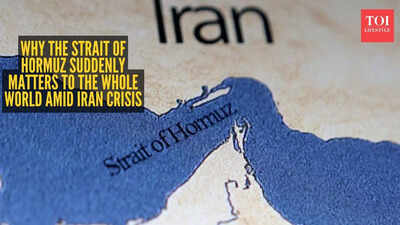
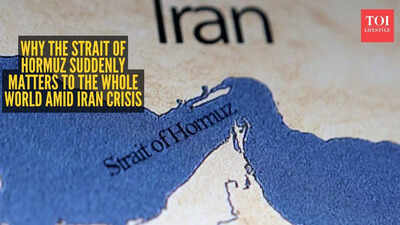
The Strait of Hormuz has suddenly moved from geography textbooks to breaking news alerts.After recent military strikes on Iran, reports suggest the country has effectively restricted movement through this narrow sea route. Oil prices reacted almost instantly. Airlines began adjusting flight paths. Governments across continents started issuing advisories.And suddenly people everywhere are asking the same question: how can one thin stretch of water affect the entire world?The answer is surprisingly simple – and slightly unsettling.So, where exactly is the Strait of Hormuz?
All about Strait of Hormuz
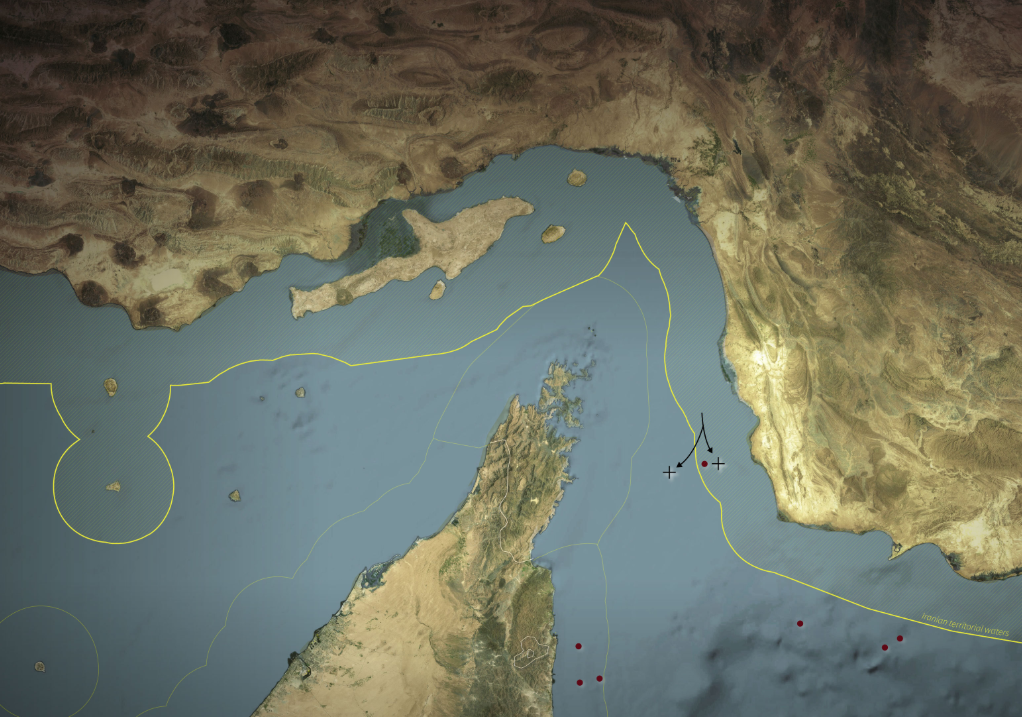
The Strait of Hormuz sits between Iran and Oman, acting as the only sea exit from the Persian Gulf into the Arabian Sea and the wider Indian Ocean.On one side is Iran. On the other are Gulf countries such as the UAE and Oman. But the real story isn’t geography – it’s traffic.Almost every oil tanker leaving major energy producers like Saudi Arabia, Iraq, Kuwait and Qatar must pass through this route before heading toward Asia, Europe or beyond.At its narrowest point, the strait is barely 33 kilometres wide. The shipping lanes used by giant tankers are even tighter.It looks small on a map. But economically, it’s one of the most important places on Earth.
Why does this tiny passage matter so much?
Because energy flows through it. A lot of energy.Roughly one out of every five barrels of oil traded globally travels through the Strait of Hormuz. Huge volumes of liquefied natural gas, especially from Qatar, also depend on it.So when ships move normally, the world barely notices.But when movement slows – or stops – markets react within hours.Oil becomes harder to transport. Prices climb. Shipping costs rise. Airlines pay more for fuel. And eventually, consumers feel it at petrol pumps and grocery stores.
Even countries located thousands of kilometres away feel the impact.
Has Iran actually closed the strait?
This part isn’t black and white.Iran hasn’t issued an official international declaration saying the strait is legally closed. But on the ground – or rather, on the water, things look very different.Following the strikes, vessels in the region reportedly received warnings linked to Iran’s Revolutionary Guards advising ships not to transit the area. Several tanker operators chose to pause voyages due to safety concerns.Ship-tracking data began showing fewer vessels entering the Gulf. Some ships reportedly waited outside rather than risk passing through.Security analysts are calling it a de facto closure. Not formally announced, but effectively limiting traffic because companies don’t want to gamble with safety.And for global markets, perception often matters as much as official policy.
Why would Iran take such a step?
Geography gives Iran leverage.The country sits along the northern coastline of the strait, placing it in a position to influence shipping movements. For years, Iranian officials have hinted that if military pressure or sanctions intensify, controlling access to this route could become a response.It’s strategic signalling.Disrupting shipping doesn’t just affect one rival nation. It sends shockwaves through global energy supplies, forcing the international community to pay attention quickly.In other words, the Strait of Hormuz is one of Iran’s strongest pressure points in global politics.
This isn’t the first time tensions have reached here
The strait has lived with instability before.During the Iran-Iraq War in the 1980s, both sides attacked oil tankers in what became known as the “Tanker War.” Naval escorts were deployed to protect commercial ships.Since then, incidents involving seized tankers, drone encounters and naval stand-offs have surfaced periodically. Every time tensions rise, oil markets respond almost instantly.Because history has shown how vulnerable global energy supply can be at this single location.
Why the current situation feels different
What makes this moment more serious is the wider backdrop.The reported disruption comes during active military escalation involving Iran. Airlines are already avoiding nearby airspace. Insurance costs for ships are rising. Energy traders are preparing for possible shortages.Oil prices jumped quickly because markets fear prolonged instability more than temporary disruption.Even a short interruption can strain supply chains. A longer one could force countries to rethink energy routes altogether.
What does this mean for India?
For India, the Strait of Hormuz isn’t distant news. It’s directly connected to everyday economics.A significant share of India’s crude oil imports comes from Gulf nations whose exports pass through this route. If shipments slow, import bills rise. And when import costs increase, fuel prices often follow.Higher fuel prices then affect transport, aviation, food logistics and overall inflation.So while the crisis is unfolding far away geographically, its economic effects can reach Indian households fairly quickly.
Can the strait remain blocked for long?
Probably not without serious consequences.The Strait of Hormuz is recognised internationally as a critical transit route. Major naval powers maintain a strong presence nearby precisely because global trade depends on uninterrupted passage.A prolonged closure risks escalating tensions into a wider regional conflict – something most countries are keen to avoid.Historically, disruptions here tend to be temporary, even if they cause immediate market panic.But temporary doesn’t mean harmless.
Why the world is watching every development
The Strait of Hormuz may look like just another line on a map, yet it functions like a pressure valve for the global economy.When ships move freely, energy flows smoothly and markets stay calm.When uncertainty enters the picture, everything reacts – oil prices, airline routes, stock markets and government diplomacy.Right now, the situation remains fluid. The strait may not be officially declared closed, but reduced traffic alone has already created global anxiety.And that’s why leaders, traders and ordinary citizens are all watching closely.Because sometimes, the stability of the global economy depends on a narrow stretch of water most people had barely heard of until now.