






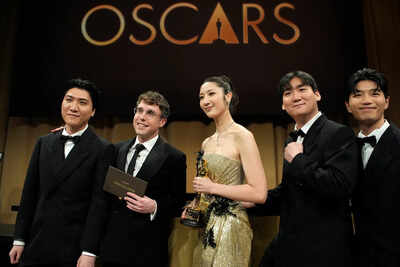
For the better part of a decade, Hollywood has tried to position itself as the moral conscience of the modern world. From red-carpet speeches to acceptance-stage manifestos, actors, producers, and musicians have increasingly used entertainment platforms to advocate for political and social causes. However, this embrace of “woke-ism”—a term often used to describe progressive activism, diversity mandates, and social justice messaging in films, awards shows, and celebrity statements— has reached a point of peak saturation. My question is: Why didn’t they all listen to Ricky Gervais’ 2020 Golden Globe opening speech? “Woke-dom” need not have reached a boiling point, maybe. Just maybe.Here’s just a reminder of a small portion of British actor comedian Gervais’ now famous/infamous (depending on your outlook) speech. He said: “If ISIS started a streaming service, you’d call your agent, wouldn’t you? If you do win an award tonight, don’t use it as a platform to make a political speech, all right? You’re in no position to lecture the public about anything. You know nothing about the real world, most of you spent less time in school than Greta Thunberg.”
Thud! Did you hear that? That was the sound of the collective ego of Hollywood crashing. Gervais, obviously, won’t be ever asked to host any award show again. But, right, he was.
Cognitive dissonance with virtue signalling
‘Hollywood Heft-ies’ though, drunk on their own sense of self-importance, did not pay heed. And here we are, five years later. The applause that once greeted celebrity activism has turned into exhaustion, irritation, and is now a major backlash. For sake of brevity, and clarity, let’s begin from the award ceremonies this year—2026. When actor Mark Ruffalo a.k.a. The Hulk, attended the 2026 Golden Globes wearing a “Be Good” pin, part of a protest against US Immigration and Customs Enforcement (ICE)... or advocated for the Gaza conflict to come to a peaceful end, there was a collective sigh of exhaustion; not because either of the causes aren’t worth talking about, but because people are tired of the hypocrisy of superrich Hollywood stars using their celebrity capital to draw more attention to themselves.
This distinction is really important to understand
It’s not as if people don’t care about causes that affect the world, be it climate change, racial justice, gender equality, war, pandemic, vaccinations et al. They do. The backlash is specifically against the relentless moralising that accompanies these messages. Please, Hollywood, give us a break! But, it’s not as if la la land hasn’t flirted with politics before. It has, and some of them make for great stories. Like when Jane Fonda was almost banned from the biggies in business for her her anti-Vietnam War protests in the 1960s. In the 1980s, Elizabeth Taylor was the biggest name to start the conversation about the societal prejudice on AIDS and the deplorable medical neglect of AIDS patients. Some of the biggest names from the glamour world, like Taylor’s good friend Rock Hudson, or British band Queen’s famous lead singer, Freddie Mercury, died of the same. That truly was Taylor’s ‘Cleopatra’ moment; talking about a subject so taboo that Hollywood actually made it untouchable while the diseases was at its peak… only to make innumerable movies about it within a decade as a face-saving gesture.
When activism becomes a performance
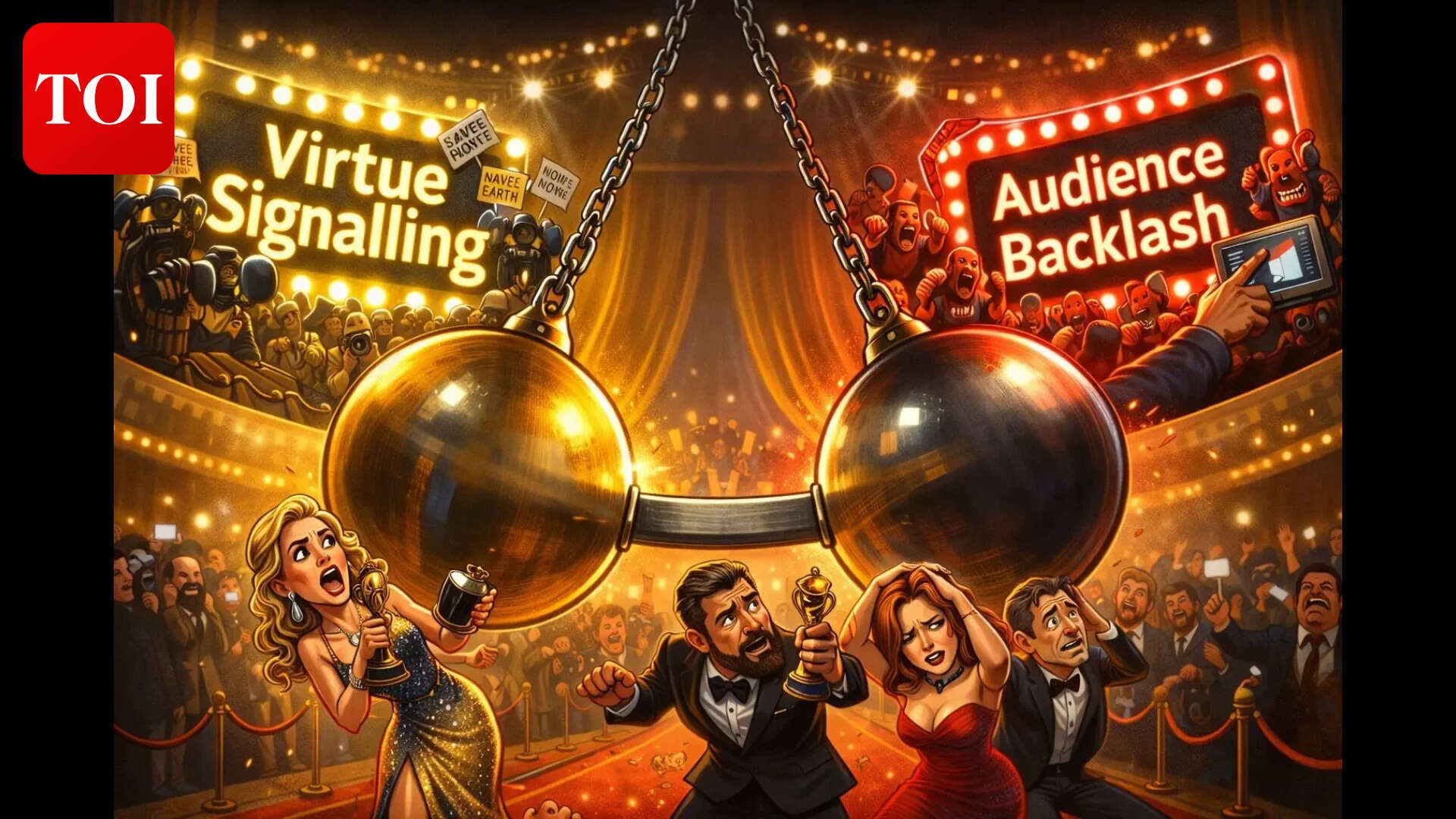
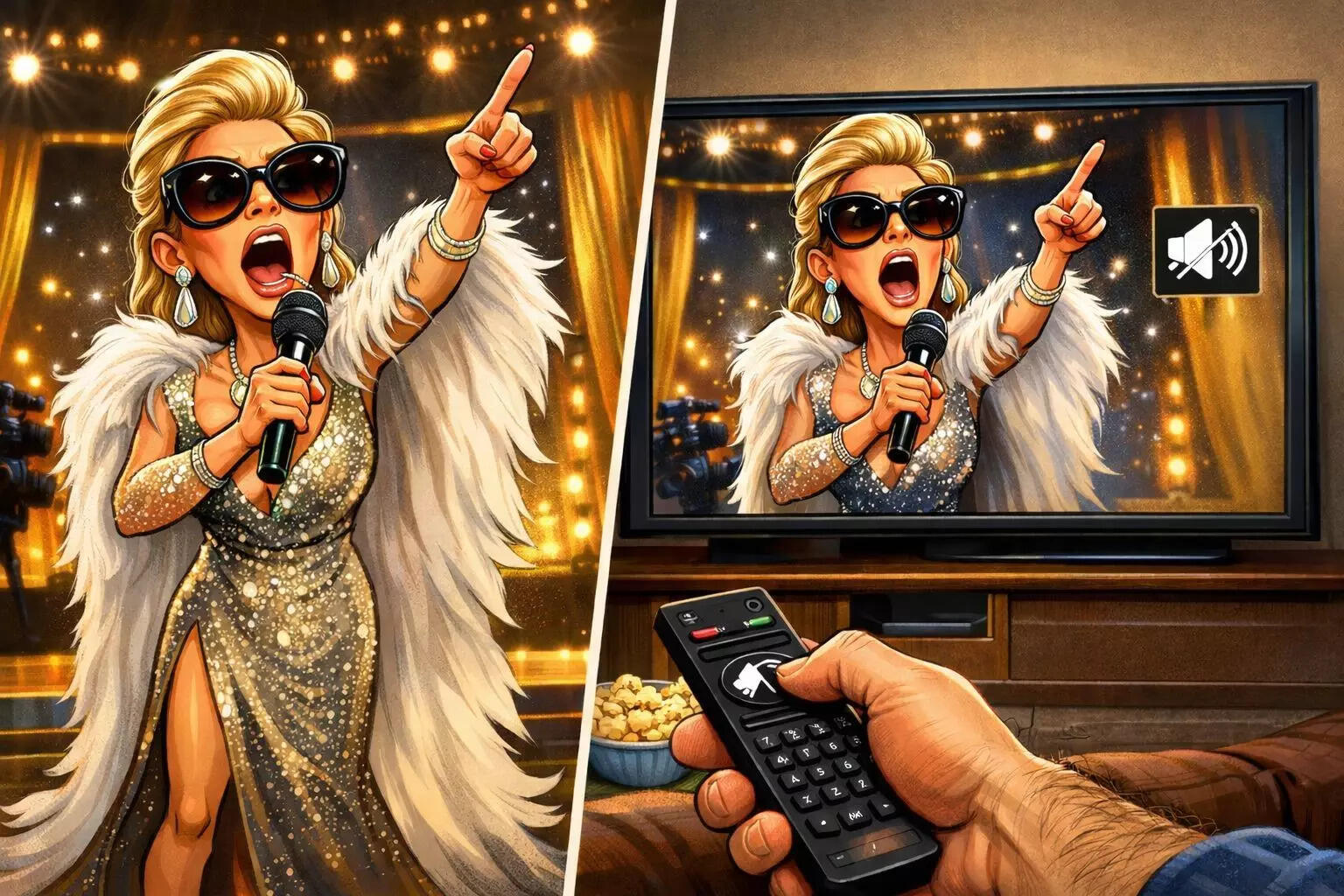
So, if actors and filmmakers have often used their influence for causes, what has changed today? How did this behaviour reach peak backlash stage? The answer is in the tone and the frequency of these virtue-signalling messages, especially since the 2010s. The rise of social media has turned celebrities into full-time commentators. Political messaging seeped into award shows, press junkets, late-night talk shows, and even film promotion tours. Campaign hashtags appeared on red carpets. Acceptance speeches became miniature policy statements. At the same time, many studios began weaving explicit ideological messaging into mainstream films and TV series—sometimes subtly, sometimes with a sledgehammer.In a post-Covid, war-torn world, we are all seeking escapism after long workdays, what with our perpetually-anxiety ridden bodies and mind. Instead, we are being confronted with political sermons from millionaires in designer gowns. It feels hypocritical to say the least, and an insult if we think about it a bit more. Let’s be frank, social media has ensured that we are all painfully aware of every little thing that is happening in the world, hear every word being uttered by politicians, entertainers, businessmen, stand-up/sit-down comedians etc., every day. And most of us either have an opinion on them, or are in the process of forming one. What people want from movie and music award ceremonies is the simple pleasure of watching well-dressed stars sashaying on the red carpet, followed by a bit of banter about the movies and the entertainment eco-system, maybe some anecdotes to discuss later with friends. As simple as that. That’s how any international award ceremony used to be. And even if there was any political messaging, it wasn’t in-your-face. Now, all people see is the Hollywood Woke Brigade’s selfish hankering for more attention. The extravagant gestures. Moral grandstanding. It’s relentless, and increasingly drawing jaded reactions from audiences around the globe. The case of American singer-songwriter Billie Eilish, during the Grammy Awards this February, was the tipping point.
AI Generated
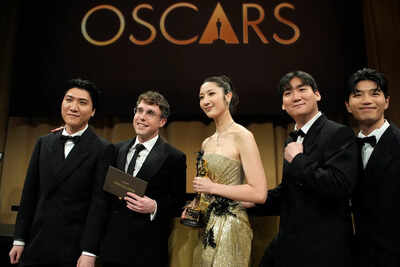
At the 2026 Grammy Awards, American singer-songwriter Billie Eilish faced backlash after declaring “no one is illegal on stolen land” while criticizing ICE (United States Immigration and Customs Enforcement), during her award acceptance speech. It’s as if the floodgates had been opened. People who were mildly irritated but still tolerated stars and their political messaging, suddenly said: enough is enough. Eilish’s remarks did not just draw sharp criticism over “performative activism”; a lot of people pointed out that her $14 million LA home is on Indigenous land, prompting accusations of hypocrisy. Some online critics went as far as to say that she “hand over” her own home if she truly believed the land was stolen, raising debates about the accountability of celebrity activism. The backlash intensified like never before. We must have all seen images of Eilish’s mansion on our social media apps. The time for wealthy influencers making sweeping political statements was being called out like never before.For clarity, let’s consider the Oscars as a barometer for Hollywood’s cultural relevance. Though all award ceremonies, from the Golden Globes to Bafta (British), have all been ‘woke-nised’ as a great PR move in the past decade, actual numbers suggest that everyone has had quite enough. Viewership of all award ceremonies has taken a sharp plunge. And X (formerly Twitter) is full of posts of people declaring they would do anything under the sun but watch another award ceremony full of “unbearably preachy stars.”
The number story
Hence, Wokeism Capital is having an effect quite opposite to what these stars may have hoped— it’s actually driving people away rather than drawing them in. For e.g., in the pre-pandemic era, the 2020 Academy Award ceremony drew 23.6 million viewers, a far cry from the 34.4 million in 2016. The COVID-affected 2021 show hit rock bottom at 10.4 million, but even as restrictions eased, recovery has been sluggish. The 2022 Oscars climbed to 16.6 million, 2023 to 18.7 million, and 2024 to 19.5 million—a post-pandemic high, boosted by blockbusters like ‘Oppenheimer’ and ‘Barbie’. However, 2025 saw a 7% drop to 18.1 million, marking the first decline in four years and underscoring a plateau.Social media amplifies this backlash, with users decrying Hollywood as a hub of “narcissists acting like activists.” On X, searches for terms like “Oscars woke” reveal widespread frustration. One user lamented, “These award shows are not fun anymore…” Another tied it to broader industry woes: “Flush with money and insulated from reality, they’ve stopped maximizing profit. Now it’s all about maximizing social credit”. Hollywood appears to be moving from sincere progressive messaging to ironic, bipartisan takes on culture wars—turning once-serious issues into exaggerated, entertaining parodies for broader appeal. With diversity gains reversing and economic uncertainty, studios may prioritize profitability over ideology, leading to more broadly appealing projects. If the same “woke” elements continue alienating, expect accelerated flops for preachy remakes and a renaissance for escapist, high-concept entertainment. If Hollywood doesn’t adapt—by reducing pulpit moments, focusing on universal stories, and rebuilding mystique, ratings could slide back toward pandemic lows or worse. Somewhere in London, Gervais is having a good laugh.