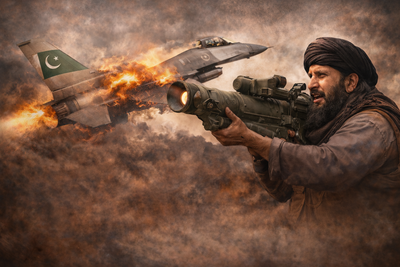
NEW DELHI: Afghanistan on Friday claimed that Pakistan had lost an American-made F-16 fighter jet during overnight strikes targeting multiple Afghan cities. Social media accounts linked to what they described as “Afghanistan Defense” shared a video purportedly showing burning wreckage of an F-16, alleging it had been shot down by Taliban defence forces.Pakistan has not confirmed any loss of an F-16. There has been no independent verification of the video. X’s in-house AI tool Grok flagged the footage as not authentic, stating, “No, this video isn’t real as claimed.” As of now, there are no confirmed reports that a Pakistani F-16 has been shot down.
The claim emerged after Pakistan launched military action under Operation Ghazab Lil Haq, describing it as retaliation for what it called “unprovoked firing” from Afghanistan. Strikes were reported in Kabul, Kandahar and other locations. Afghan authorities said they responded to the attacks, escalating tensions along the border.Also read: Did Pakistan lose another F-16? Afghanistan makes big claim; shares video
Can Afghanistan down an F-16?
An F-16 is a fourth-generation multirole fighter aircraft equipped with radar warning receivers, electronic countermeasures, flares, chaff and data-linked situational awareness systems. It is designed to operate in contested airspace and defend against surface-to-air threats.For Afghanistan to shoot down an F-16, it would need either:
- A modern long-range surface-to-air missile (SAM) system with radar tracking capability, or
- Effective short-range air defence systems capable of engaging a fast-moving jet during low-altitude operations.
There is no verified evidence that Afghanistan operates advanced long-range air defence systems such as S-300, S-400, Patriot, HQ-9, Aster 30 or NASAMS. Afghanistan does not have a modern integrated air defence network comparable to regional militaries.
How can an F-16 be downed?
Broadly, an F-16 can be downed under the following circumstances:1. Surface-to-air missile (SAM) engagement: Ground-based air defence systems can track and engage fighter aircraft using radar-guided or infrared-guided missiles. Long-range systems use integrated radar networks to detect targets at extended distances, while short-range systems or man-portable air defence systems (MANPADS) can target aircraft flying at lower altitudes. If a missile successfully locks onto the aircraft and defeats its countermeasures, it can cause critical damage.2. Air-to-air combat: Another fighter aircraft equipped with beyond-visual-range or short-range air-to-air missiles can engage an F-16. Modern air combat depends heavily on radar detection, electronic warfare and positioning. A successful missile shot, particularly if launched from an advantageous position, can neutralise even a capable aircraft.3. Anti-aircraft artillery or ground fire: If flying at low altitude during strike missions, an F-16 may be exposed to radar-guided anti-aircraft guns or heavy machine gun fire. While modern jets typically operate at altitudes designed to minimise this risk, low-level operations increase vulnerability.4. Operational or mechanical factors: Aircraft losses can also occur due to mechanical failure, battle damage affecting critical systems, or pilot ejection following partial system loss.
What does Afghanistan have?
After the Taliban takeover in August 2021, Afghanistan inherited military equipment from the former Afghan National Defence and Security Forces. This included aircraft, helicopters, armoured vehicles, small arms and ammunition abandoned by US and NATO forces.Open-source assessments suggest Afghanistan possesses:
- Older Soviet-era man-portable air defence systems (MANPADS), such as variants of the SA-7
- Anti-aircraft artillery, including systems similar to the ZSU-23-4
- Heavy machine guns capable of low-altitude engagement
- Large stockpiles of US-supplied small arms and ammunition
The United States left behind billions of dollars’ worth of military equipment in 2021. However, this did not include advanced long-range surface-to-air missile systems. While there is a possibility that some portable air defence weapons remain in the country, there are no confirmed reports of Afghanistan operating a modern radar-guided missile network capable of systematically targeting high-performance jets at extended range.
Is it technically possible?
In theory, any fighter aircraft operating at low altitude within range of short-range air defence systems or MANPADS can be engaged. Portable infrared-guided missiles are designed to track heat signatures from aircraft engines. If an F-16 were flying low and within engagement range, there could be a theoretical possibility of a successful hit.However, such outcomes depend on multiple factors:
- Altitude and speed of the aircraft
- Electronic countermeasures deployed
- Pilot manoeuvring
- Radar and detection environment
- Tactical support such as airborne early warning systems
Modern fighters are trained and equipped to minimise exposure to short-range threats.
What is the F-16 and how many does Pakistan operate?
The F-16 Fighting Falcon is a single-engine, fourth-generation multirole fighter aircraft developed by the United States. Designed for both air-to-air combat and air-to-ground strike missions, it is known for its high manoeuvrability, advanced avionics and relatively lower operational cost compared to heavier twin-engine fighters.
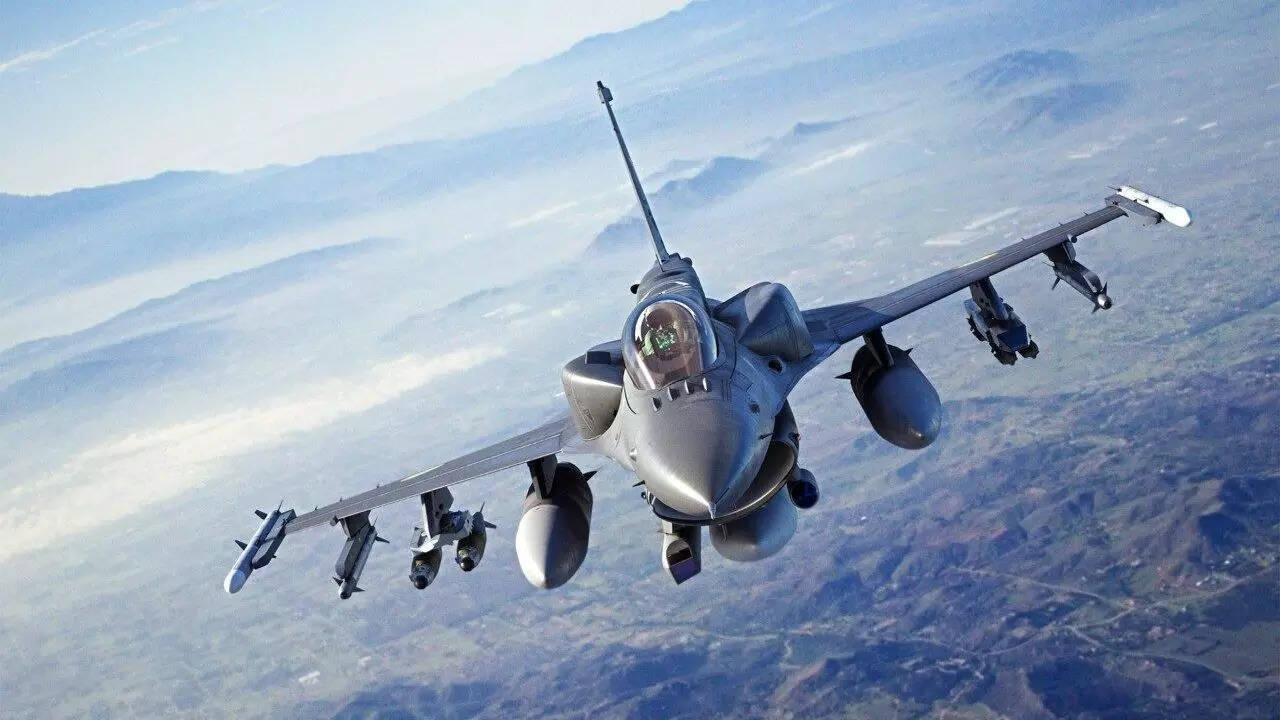
The aircraft is equipped with modern radar systems, beyond-visual-range missile capability, precision-guided munitions compatibility, and electronic warfare suites. Over the decades, the F-16 has undergone multiple upgrades, with newer variants featuring improved radar, targeting pods and enhanced survivability systems.Pakistan is one of the long-standing operators of the F-16. The Pakistan Air Force (PAF) inducted the aircraft in the 1980s. Over time, it acquired multiple batches, including earlier F-16A/B models and later F-16C/D Block 52 variants. Open-source defence assessments estimate that Pakistan operates approximately 70 to 75 F-16 aircraft, though exact operational numbers can vary due to maintenance cycles and upgrades.The F-16 remains one of the most capable platforms in Pakistan’s fleet and is often described as a key asset for air defence and precision strike roles.