








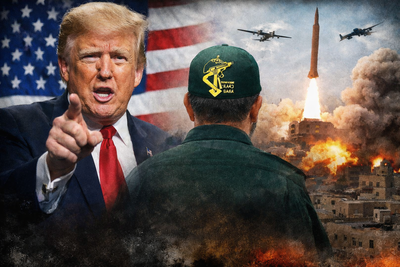
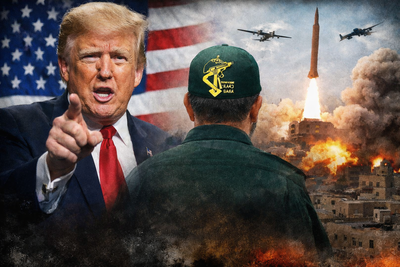
NEW DELHI: Two days after the US-led military mission Operation Epic Fury killed Iran’s Supreme Leader Ayatollah Ali Khamenei, President Donald Trump made a striking claim about past threats to his life.“I got him before he got me. They tried twice, I got him first,” Trump said, referring to what he described as Iranian plots to assassinate him.According to ABC News, Trump linked his remark to US intelligence assessments of a 2024 plot allegedly connected to Iran. Earlier, he had also said, “Iran tried to interfere in the 2020 and 2024 elections to stop Trump.”The question now being asked in security circles is whether Iran, particularly the Islamic Revolutionary Guard Corps, has the capability to directly target a former or sitting US President, and how realistic such a scenario is.
Direct military strike: Highly unlikely
A direct state-sponsored attack by Iran on a US President inside American territory would constitute an act of war. It would invite immediate and overwhelming retaliation across military, cyber and strategic domains.Militarily, Iran does not possess operational intercontinental ballistic missiles capable of reliably striking deep inside the continental United States. Even if it did, penetrating US early warning systems and missile defence networks would be extremely difficult.The US homeland is protected by layered radar coverage, ground-based interceptors and integrated aerospace monitoring. Any incoming long-range missile would be detected within minutes. The political cost of launching such an attack would be catastrophic for Tehran.
Aerial threats: Layered protection
Protection of the President is handled by the United States Secret Service, backed by the US military and intelligence agencies.If Trump is in Washington, restricted airspace is permanently enforced over the capital. Temporary Flight Restrictions are imposed wherever he travels. NORAD monitors airspace violations in real time, and fighter jets can be scrambled rapidly.When flying, the President travels aboard Air Force One, a hardened aircraft equipped with secure communications and defensive countermeasures. In high-threat environments, additional military assets may be positioned discreetly.Missile defence systems such as Patriot and THAAD are deployed in overseas theatres where US leadership may travel. These systems intercept short and medium-range ballistic threats.
Drone and asymmetric risks
The more plausible threat does not come from intercontinental missiles but from asymmetric methods. Low-cost drones, cyber operations, or proxy networks are more realistic tools for harassment or symbolic retaliation.The US has expanded counter-drone systems around sensitive sites. These include radar detection, radio frequency jamming and kinetic interception options. During presidential events, venues are swept in advance, perimeters are secured, and layered counter-assault teams remain on standby.
Ground-level and covert threats
Historically, threats to US presidents have more often come from individuals or small cells rather than foreign militaries launching overt strikes.In 2024, Trump survived two alleged assassination attempts, including a shooting incident at a rally and a separate armed threat while golfing in Florida. Months later, US authorities charged Farhad Shakeri, described by the Justice Department as an “Iranian asset,” over an alleged IRGC-linked plot to kill Trump. Iran denied the charges.These cases underline that if any risk materialises, it is more likely to emerge through covert or proxy channels rather than overt missile strikes.
Strategic calculation
For Iran, attempting to directly attack a US President would cross a red line with unpredictable consequences. Even during high-intensity confrontation, states tend to avoid actions that guarantee full-scale war.Trump described Khamenei as “one of the most evil people in history” and wrote, “This is not only Justice for the people of Iran, but for all Great Americans, and those people from many Countries throughout the World, that have been killed or mutilated by Khamenei and his gang of bloodthirsty THUGS.”Such rhetoric sharpens tensions. But from a security standpoint, the President of the United States remains one of the most heavily protected individuals in the world.No protection system is absolute. However, layered air defence, real-time intelligence monitoring, hardened transport, constant Secret Service protection and rapid military response capabilities make a successful state-directed aerial strike on a US President extraordinarily unlikely.