








Driving the news
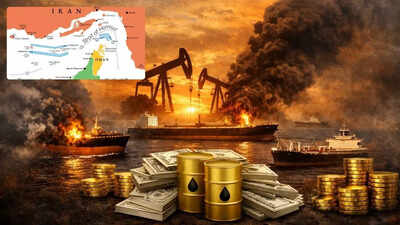
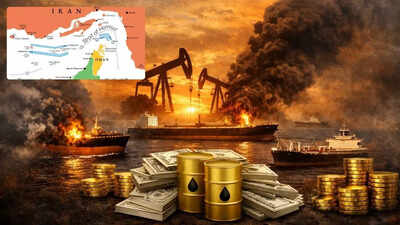
The US-Iran war is driving a sharp and politically dangerous oil shock, but one of the biggest ironies of the conflict is that it is enriching both Tehran and Moscow.As Iran attacks Gulf energy assets and shipping through the Strait of Hormuz remains severely disrupted, crude has surged above $100 a barrel, turning the region’s security crisis into a revenue windfall for two of Washington’s main adversaries. The immediate market damage is being felt in Asia, where importers are rationing fuel, releasing reserves and scrambling for alternative supplies. But the financial upside is flowing in the opposite direction: to Iran, which is still exporting oil despite war and sanctions, and to Russia, which is benefiting from tighter global supply, rising prices and a renewed rush by Asian buyers toward its crude.Bloomberg reported that Brent rebounded toward $105 a barrel after Iranian drones and missiles struck energy infrastructure in the United Arab Emirates and Iraq, including the Shah field and the port of Fujairah. The conflict has entered its third week with no sign of easing, with large parts of Asia as moving into energy “triage” as governments try to manage shortages and prevent price spikes from feeding through into their economies.That combination – disrupted Gulf supply, constrained shipping and higher benchmark prices – is exactly the sort of market environment in which Iran and Russia can make outsized gains.
Why it matters
For Iran, the windfall is both direct and immediate. The Financial Times reported that Tehran is likely earning more than $140mn a day from oil sales as prices surge and Washington allows exports to continue to avoid worsening the global supply crunch.That is the key contradiction at the center of this war. The US is striking Iran militarily, but it is not fully choking off Iranian oil exports. According to the FT, at least 13 supertankers have loaded crude at Kharg Island, Iran’s main export terminal, since US and Israeli strikes began. Kpler data cited by the FT showed that about 24mn barrels of Iranian crude had passed through the Strait of Hormuz during that period, even as Iran effectively shut the waterway to many other vessels by attacking tankers in the Gulf.Treasury secretary Scott Bessent made Washington’s calculation unusually explicit. “The Iranian ships have been getting out already and we have let that happen to supply the rest of the world,” he told CNBC, according to the FT. He added: “We think that there will be a natural opening that the Iranians are letting out and for now we are fine with that. We want the world to be well supplied.”That means Tehran is not just surviving the conflict financially. It is monetising it.With Brent above $100 and Iranian crude still moving, even at a discount, every day of continued exports gives Tehran hard-currency revenue at a moment when the market is desperate for barrels.
Between the lines
Iran’s advantage is not only that it is still selling oil. It is that the war has allowed it to tilt the regional market in its favor.Bloomberg reported that shipping through Hormuz is becoming more selective, with JPMorgan analysts led by Natasha Kaneva warning that transit is likely to become “increasingly conditional,” depending in part on the political alignment of vessels. Bloomberg also reported that the number of Iranian ships crossing the waterway hit a wartime high on Monday, including an oil tanker headed for China.So Tehran appears to be doing two things at once: restricting other countries’ flows while preserving, and in some cases accelerating, its own. That is a powerful market lever. It lets Iran capitalize on higher prices while weakening competing exporters in the Gulf whose output is being curtailed because they cannot move or store enough crude.The FT reported that Iran had loaded roughly 1.5mn to 1.6mn barrels a day on to tankers since the conflict began, citing analysts at Kpler and Vortexa. Jashan Prema at Kpler told the FT, “This is in line with the averages we have seen over the past year,” while adding that even after US attacks on Kharg Island, “It has been fairly consistent, we have not seen a big change.”Claire Jungman of Vortexa told the FT that some of the vessels loading Iranian crude belong to the so-called shadow fleet, which was built to move sanctioned oil under risky conditions. “It is important to remember that these businesses are very used to taking risks. This is essentially what this fleet was built for,” she told FT.In other words, Iran entered the conflict with the infrastructure, commercial networks and sanctions-evasion tactics needed to keep earning money under pressure. The war has made those capabilities even more valuable.
The big picture
Russia may be the larger strategic beneficiary.In another report, the FT described how Moscow is earning as much as $150mn a day in extra budget revenues from surging oil prices, making it perhaps the biggest single winner from the Middle East conflict. According to FT calculations based on industry data and analyst assessments, Russia could receive an additional $3.3bn-$4.9bn in revenue by the end of March if current oil pricing holds.That is a remarkable turnaround. Before the Iran war, Russia had been under mounting pressure from weaker prices, tighter sanctions and softer demand from some buyers. The FT noted that Russian crude and oil product exports had fallen 11.4% in February to 6.6mn barrels a day, the lowest since the 2022 invasion of Ukraine, citing an International Energy Agency report.Now, Gulf disruption has changed the demand picture. With Middle Eastern flows constrained, India and China are turning back to Russia in larger volumes. The FT cited Kpler data showing Indian imports of Russian oil running at 1.5mn barrels a day as of Wednesday, up 50% from early last month. Sumit Ritolia of Kpler told the FT: “Russia is the big winner of this conflict.”The Economist reached a similar conclusion, arguing that the de facto closure of Hormuz has made Russian oil “harder to shun” and has reversed the fortunes of Moscow’s energy sector. It said tankers that had previously been destined for onward transfers to China were rerouting toward India after the US issued sanctions waivers for refiners buying Russian crude.That matters not only because Russia is selling more oil, but because it is selling at much better prices. The FT reported that Russian crude is now trading around $20-$30 a barrel above its average of the previous three months, while Kpler analysts believe Russian oil in India is being sold at roughly a $5 premium to Brent, flipping the old sanctions discount on its head.For the Kremlin, that is a budget gift at a critical moment.
What they are saying
Analysts quoted across the source material describe a market where price, politics and wartime shipping risk are all reinforcing each other.Rebecca Babin of CIBC Private Wealth Group told Bloomberg Television: “There is a push and a pull constantly dragging the market higher and lower each day, based on the sheer amount of headlines.” She added: “This is a market with about 100 stories running at once that’s frantically trying to determine how much supply is off the market and for how long.”Chris Weston of Pepperstone told Bloomberg that “The biggest risk in the market is the Strait of Hormuz remaining constrained for a longer stretch and the market feeling the US and its allies have a limited capacity to alter the dynamic.”That is especially important because the US does appear to have limited help. Reuters, AFP and Bloomberg all reported that many US allies have reacted coolly to President Donald Trump’s demand for support in reopening Hormuz. Germany, Spain, Italy, Japan, South Korea and others have either refused or avoided firm commitments.Bloomberg quoted German Defense Minister Boris Pistorius asking: “I wonder what is Trump expecting from a handful of European frigates which the mighty US Navy cannot achieve there on its own.”Every day that allied hesitation continues, the market signal is the same: replacement barrels matter more, and Russian and Iranian barrels become more profitable.
What’s next
The immediate windfall for Iran and Russia is real, but both gains come with limits.For Iran, the central question is whether Washington continues to tolerate exports. The FT quoted Helima Croft of RBC Capital saying, “If we continue up this escalation ladder, a move to restrict Iranian oil exports will likely gain more Oval Office traction.” That suggests the current permissive stance could harden if the war intensifies further or if pressure grows in Washington to hit Tehran’s finances more directly.There is also the military risk. Michael Doran of the Hudson Institute told the FT that President Donald Trump “would love to seize Kharg Island,” though he added that “American Marines on Kharg Island would be sitting ducks” unless Iranian missile and drone threats were first neutralised.Russia’s gains also look vulnerable if the market normalises. The Economist described the current boost as a “sugar high,” arguing that higher prices do not solve Russia’s deeper structural problems: damaged infrastructure, weak investment, sanctions and limited spare capacity. Even if Russia earns billions more in the short run, that does not fully repair the long-term erosion of its energy sector since 2022.Still, those caveats are secondary to the present reality. Right now, the war has produced a deeply uncomfortable outcome for Washington and its partners. Energy-importing economies are paying more. Asian governments are conserving fuel and subsidising consumers. US allies are being pressed to help clean up a maritime crisis they did not choose. And the two states benefiting most from the oil shock are precisely the ones the West has spent years trying to isolate.The war’s military logic may be one thing. Its market logic is another. For now, the oil market is delivering the same verdict each day the Strait stays constrained: Tehran is getting cash, Moscow is rebuilding fiscal breathing room, and the costs are being exported to everyone else.(With inputs from agencies)