









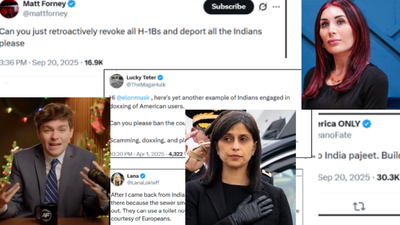
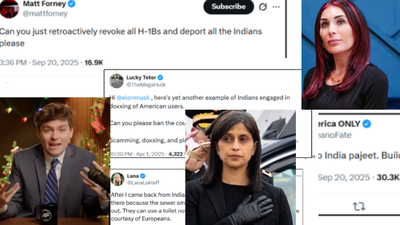
Indian Americans make up about 5.2 million people, roughly 1.6% of the United States population, and their influence in business and technology is widely documented. The community accounts for more than 55% of US funded firms, and Indian-born entrepreneurs represent the largest national-origin group among immigrant founders.Yet despite that economic presence, a growing wave of hostility has emerged online. Across social media platforms, particularly X, anti-Indian rhetoric has surged in recent months, raising questions about whether the hostility reflects spontaneous online sentiment or the influence of coordinated networks.Those concerns form the basis of a recent report by the Network Contagion Research Institute (NCRI) titled “How a Small Network Hijacked the Immigration Debate.” The study examined how anti-Indian narratives spread online and what factors fueled their amplification.
Study tracks more than 24,000 posts and 300 million views
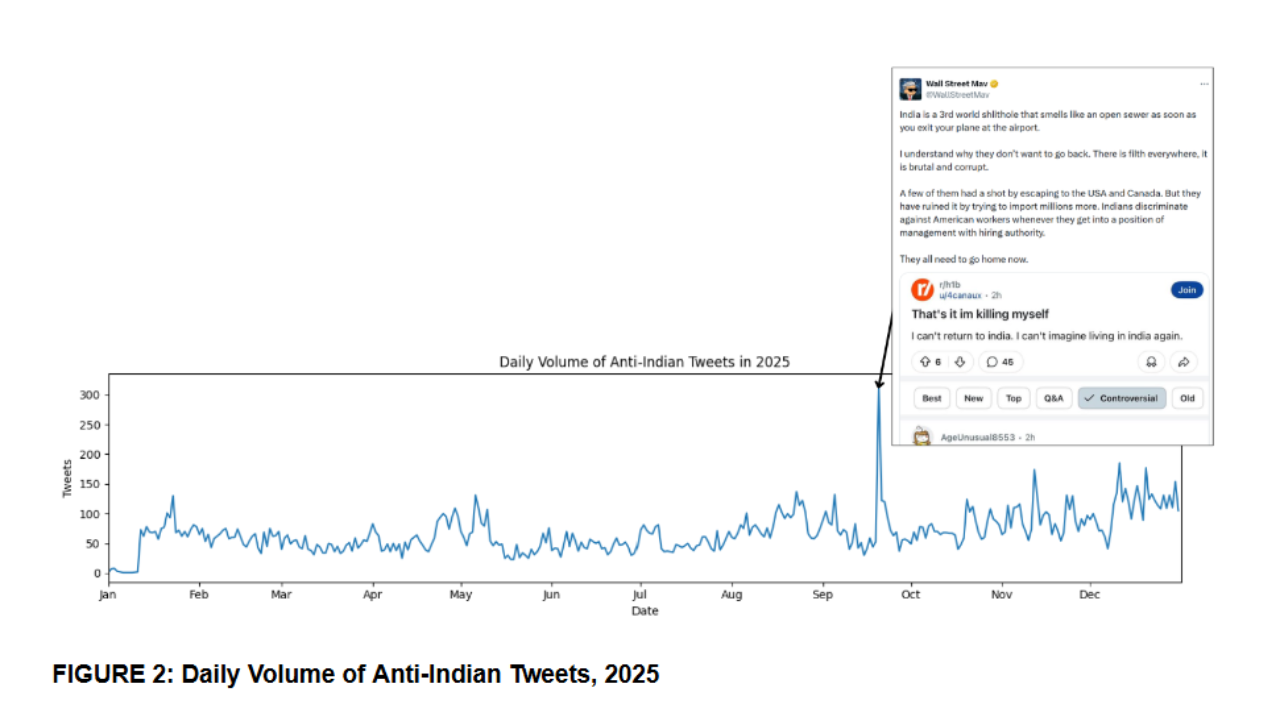
According to the NCRI report, anti-Indian content on X tripled in weekly volume during 2025. Between January and December 2025, the researchers identified more than 24,000 posts, which collectively generated over 300 million views.The data suggests that the increase was not gradual but tied closely to specific policy discussions around immigration in the United States. Several immigration-related developments in 2025 served as major triggers for spikes in online hostility. These included the Department of Homeland Security’s H-1B modernization rule, which took effect on January 17, 2025, along with State Department visa restrictions and a White House proposal introducing a $100,000 petition fee.
By spreading racial slurs and framing Indians as outsiders, it reinforces a hierarchy narrative that positions certain communities as less deserving of belonging.
Researchers observed that such policy debates often became flashpoints for anti-Indian narratives.One example occurred on September 19–20, when posts surged dramatically. Normally, anti-Indian content on X averaged 50 to 100 posts, but on those two days the volume jumped to around 300 posts.The report notes that many of the most widely shared posts during these spikes celebrated immigration restrictions while also targeting Indians directly.“Most of the highly-engaged anti-Indian tweets during this period applauded this order as a way to curb Indian immigration into the US while simultaneously engaging in racist verbal abuse against Indians,” the study states.
Immigration debates increasingly framed Indians as “invaders”
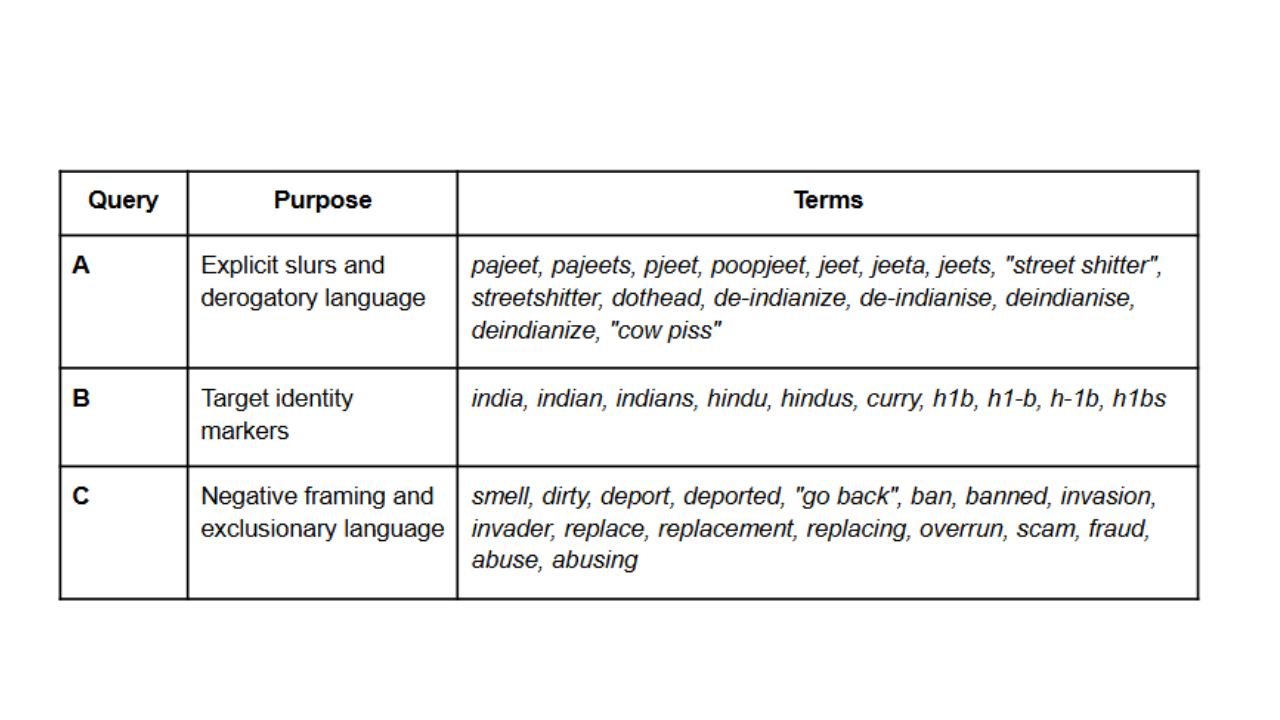
The researchers found that policy debates about immigration frequently shifted into broader ethnic accusations.Discussions that began as arguments about labour markets or visa systems often evolved into collective blame narratives targeting Indians as a group.According to the report, early 2025 saw a surge in explicit racial slurs such as “pajeet.” By mid-year, the language increasingly revolved around conspiracy narratives describing Indians as demographic “invaders” or economic “replacers.”The framing differs from rhetoric directed at some other immigrant groups. While attacks on communities such as Somali immigrants in cities like Minneapolis often portray them as burdens on public resources, the criticism directed at Indians takes a different tone.
The report notes that many of the most widely shared posts during these spikes celebrated immigration restrictions while also targeting Indians directly.
Indian-American households recorded a median annual income of $151,200 in 2023, far higher than the national median. In addition, 77% of Indian Americans hold a bachelor’s degree or higher, compared with 38% of native-born Americans.Because of these socioeconomic outcomes, many online attacks frame Indians not as welfare recipients but as competitors who are allegedly “stealing American jobs.”
Researchers say amplification was concentrated
The study also challenges the idea that the surge in anti-Indian rhetoric developed organically.According to NCRI, amplification was highly concentrated among a small number of accounts. The three most prolific posters, NeonWhiteCat, MattForney and TheBrancaShow, generated more than 10% of all likes and 20% of all retweets associated with anti-Indian content in the dataset.Researchers say several of the most influential accounts spreading such narratives have links to white nationalist networks or have previously been associated with online incitement campaigns.The report concludes that a relatively small network played a disproportionate role in pushing the issue into mainstream online discussion.
Extremist figures amplified the narrative
The report also identified connections between anti-Indian messaging and broader extremist ecosystems online.Influencers such as Nick Fuentes and Sneako, who have previously appeared in studies examining antisemitic and far-right online campaigns, were among those amplifying the discourse.Fuentes in particular has used his social media platforms to mock Indian culture and deploy racial slurs. In several instances, he has used the phrase “go back to India” while attacking Indian figures online.
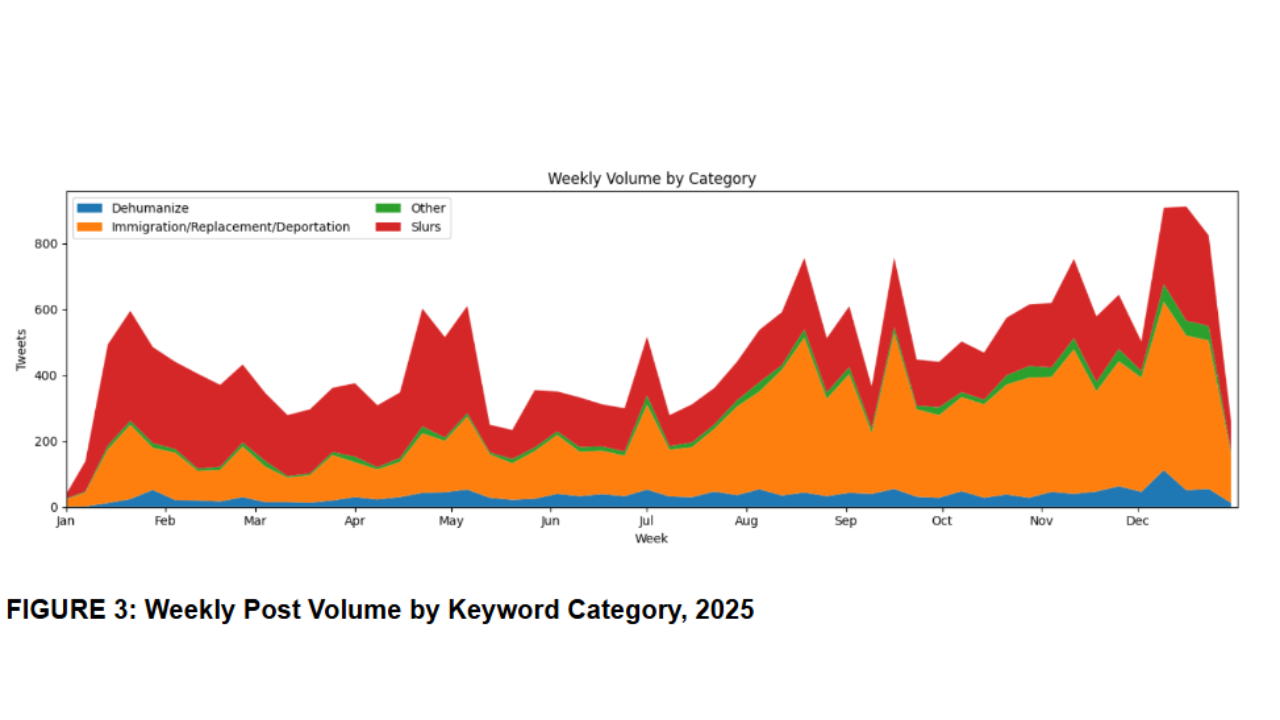
According to the report, early 2025 saw a surge in explicit racial slurs such as “pajeet.” By mid-year, the language increasingly revolved around conspiracy narratives describing Indians as demographic “invaders” or economic “replacers.”
His rhetoric has extended to prominent public figures as well. Fuentes has targeted Usha Vance, the wife of U.S. Vice President JD Vance, referring to her using the slur “jeet.”Researchers say such messaging does more than simply insult individuals. By spreading racial slurs and framing Indians as outsiders, it reinforces a hierarchy narrative that positions certain communities as less deserving of belonging.
A warning about how online narratives spread
The NCRI report argues that the surge in anti-Indian rhetoric illustrates how quickly online narratives can be amplified when immigration debates intersect with identity politics.While the United States continues to rely heavily on skilled immigrant labour, including many professionals from India, the study suggests that social media ecosystems can reshape policy debates into racialised conflicts.Beyond the data and the numbers lies a quieter consequence that rarely shows up in charts. Many Indian Americans say the atmosphere online has begun to shape how openly they express their identity in everyday life. For a community that has long taken pride in its language, festivals, food and visible cultural markers, the constant stream of ridicule and hostility can slowly push people toward caution. Some choose to stay silent online, avoid discussions about immigration, or downplay their cultural roots in professional or public spaces.But that silence carries a deeper risk. Culture is not just about celebration, it is about continuity, confidence and belonging. When communities begin to retreat from openly expressing who they are, the loss goes beyond individual discomfort. Over time, it can weaken the very identity that immigrant communities bring to the societies they help build. The Indian diaspora in the United States has contributed immensely to technology, medicine, academia and entrepreneurship, but cultural confidence has always been part of that success story. If hostility pushes people to shrink that identity, the long-term cost may not just be social tension, it could erode the vibrant multicultural fabric that has defined the American immigrant experience for generations.