









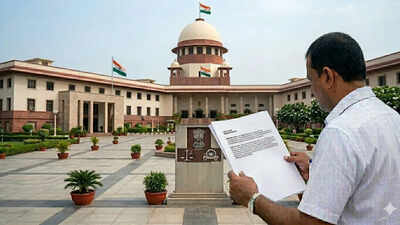
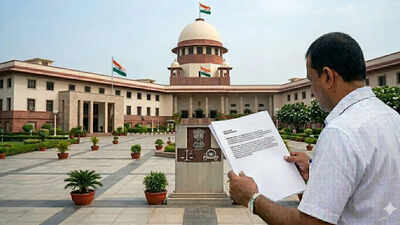
NEW DELHI: In a service law ruling, the Supreme Court has held that government employees do not have a vested right to seek promotion under old service rules just because vacancies arose before the new recruitment rules came into force.A bench comprising Justices Dipankar Datta and Augustine George Masih delivered the judgment while allowing appeals filed by the Odisha government in a dispute over promotions in the State Transport Department.What was the dispute about?The case involved two employees working in Odisha’s Transport Department who sought promotion to the post of Assistant Regional Transport Officer (ARTO).The employees argued that the ARTO vacancies had arisen when the older executive instructions of 1981 were still in force. Under those instructions, eligible senior assistants could be promoted based on merit and suitability.However, before the promotions could take place, the Odisha government restructured the cadre in 2017. Later, the Odisha Transport Service Rules, 2021 were introduced under Article 309 of the Constitution, which empowers state legislatures to regulate recruitment and conditions of service for government employees.Under the new rules:
- The ARTO post was upgraded from Group C to Group B
- The appointing authority changed
Recruitment shifted from promotion-based selection to a competitive examination conducted by the Odisha Public Service Commission (OPSC)Despite the rule change, the Orissa high court had directed the government to consider the employees for promotion under the older executive instructions. The state government then challenged that order before the Supreme Court.What did the Supreme Court ruling say?Setting aside the high court’s decision, the Supreme Court ruled that vacancies do not automatically have to be filled under the instructions or rules that existed when they arose. The court held that vacancies need not be filled under the executive instructions that were in force when they originally arose.The bench further added that governments are empowered to change recruitment policies, restructure cadres, and alter methods of selection, provided the changes are not arbitrary.The court clarified that employees do not possess an automatic or enforceable right to promotion merely because they became eligible under older executive instructions. The court reiterated that government employees have no vested right to promotion.“The Government, in the present case, chose not to fill the posts of Assistant Regional Transport Officer. This was in view of restructuring of the cadre and to enforce the 2021 Rules, which is in conformity with the law. The proposition that vacancies must be filled up by promotion in accordance with the rules which existed on the date such vacancies arose has also been negatived. Thus, the decision of the Government to fill up these vacancies in accordance with the 2021 Rules cannot be faulted.“, the court observed, as quoted by LiveLaw.What limited right do employees have?The Supreme Court explained that the only limited right available to an employee is the right to be considered for promotion and not a guaranteed promotion itself. This is an important distinction as the eligibility under an older set of instructions does not translate into an enforceable claim to be promoted under those instructions.“If the Government deemed it fit to change the method of selection, it was within its power, authority and competence and unless the changed policy is proved to be arbitrary, Dash and Sahoo cannot have a claim to the post.”, the court added, as quoted by LiveLaw.The court noted that if the government decides not to fill vacancies through promotion due to restructuring or policy changes, courts cannot compel authorities to make appointments under earlier rules.