









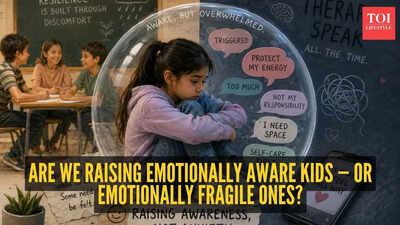
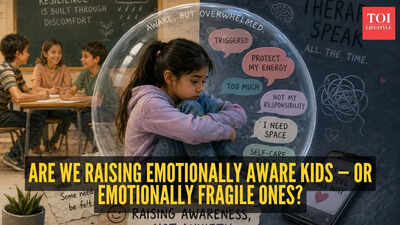
In urban classrooms and living rooms alike, a new emotional vocabulary is reshaping how children respond to everyday challenges.A 10-year-old opting out of a group activity, saying it “drains their energy,” might have sounded unusual a decade ago. Today, educators say it’s becoming increasingly familiar—especially in metro classrooms where children are growing up deeply attuned to the language of emotions.At first glance, this seems like progress. We’ve always been told that raising emotionally aware kids is a great thing. But lately, therapists and school counselors are noticing a catch: focusing too much on feelings might actually be making kids less resilient.It’s a strange paradox. Kids today can easily name exactly how they’re feeling, but they have a much harder time just sitting with those uncomfortable emotions or figuring out how to move past them on their own.
From Awareness to Overload
When “gentle parenting” became popular, it brought some really great changes—like focusing more on empathy and talking openly with kids. The whole point was simply to raise emotionally smart children who know their feelings matter.But in many urban Indian households, this approach is now being applied with an intensity that may be counterproductive.Psychologist Divya Vashisht points to a pattern emerging in clinical settings.“Emotional awareness is a gift, but we’re starting to see children who can label every feeling without necessarily learning how to sit with discomfort. Not every moment needs to be processed in depth—sometimes, resilience is built by simply moving through it.”Instead of brushing off minor frustrations, children are increasingly encouraged to analyse them. Over time, this can turn awareness into hyper-awareness—where every small discomfort feels significant and demands attention.
The Language of Therapy as a Shield
We’re also seeing a quiet change in how kids actually talk. Phrases like “triggered” or “protecting my energy” used to stay in the therapist’s office. Now, kids use them all the time, mostly picking them up from social media or just listening to the adults around them.

While these phrases are valid, their overuse can blur important boundaries. Vashisht notes that they are sometimes used to sidestep rather than solve problems.“There’s a subtle shift happening where ‘therapy language’ is being used as a shield. It’s totally fine for kids to know when they’re feeling “triggered” or need to “protect their energy.” But if they lean on those phrases too heavily, it can actually get in the way of learning how to solve problems and own their actions.”In real life, this might look like a child skipping a tough homework assignment or walking away from a minor argument, all while calling it “self-care.” The intention is protection, but the outcome may be reduced resilience.
Classroom Realities: Low Frustration Tolerance
For school counsellors, the effects are visible in real time. Sumit Verma, who works closely with students, observes a clear behavioural shift.“In schools, we’re noticing that children are far more expressive about their emotions, which is positive. But at the same time, their tolerance for frustration seems lower. Small setbacks that earlier generations might have brushed off are now becoming bigger emotional hurdles,” he explains.What’s changing is not just how children feel, but how they interpret those feelings. There is a growing tendency toward “emotional reasoning”—where discomfort is seen as proof that something external is wrong.Verma adds, “What stands out is how quickly some students turn to emotional reasoning—if they feel uncomfortable, they assume something is wrong externally. Part of growing up, however, is learning that discomfort isn’t always harmful; it’s often where growth begins.”
Gen Z vs Gen Alpha: From Breaking Stigma to Growing Up Inside It
The contrast with slightly older generations is telling. Gen Z played a crucial role in normalising conversations around mental health, breaking stigma and encouraging people to seek help.Gen Alpha, on the other hand, is completely surrounded by “therapy speak” from day one—whether it’s from how they’re parented or the content they watch. It’s a subtle but huge shift.Gen Z had to go looking for ways to process their feelings, but Gen Alpha is being handed these tools from birth. Because of this, they aren’t just aware of their emotions; they are constantly monitoring and adjusting them.
The Disappearance of “Ugly” Emotions
People in older generations usually dealt with their feelings without overthinking them. Things like anger or disappointment were just a normal part of life that you got through, instead of trying to endlessly analyze or put a label on every little emotion.Today, there is a visible effort to refine and categorise every feeling. While this can deepen understanding, it may also reduce tolerance for emotional discomfort.The messy, unpolished side of growing up—the part where resilience quietly builds—is at risk of being over-managed.
From Empathy to Individualism
Perhaps the most unexpected outcome of this shift is its effect on social behaviour. Gentle parenting aimed to foster empathy, but in its overextended form, it can sometimes tilt toward individualism.When we put our own comfort first, it’s easy to let shared responsibilities slide. Sometimes, we use self-care as an excuse to avoid compromising or stepping up for the group.That doesn’t mean emotional boundaries aren’t important—it just shows how much we need to find a middle ground between taking care of ourselves and showing up for others.Because if every discomfort is treated as a problem to be solved, children may never learn that some discomforts are simply meant to be lived throug